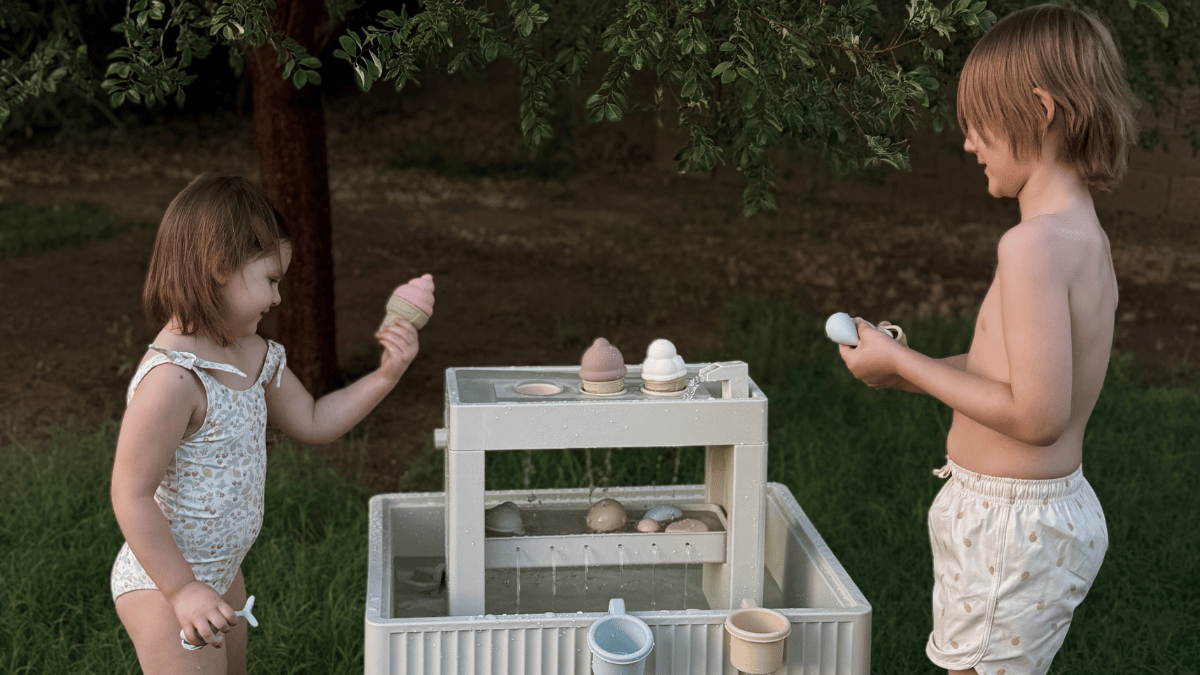

Article: Back-to-School for the Littlest Sibling: Independent Play Ideas for Toddlers at Home
Back-to-School for the Littlest Sibling: Independent Play Ideas for Toddlers at Home

The backpacks are packed. The first-day photos are taken. The bus pulls away — and your toddler is standing in the hallway, looking up at you like, "Okay… now what?"
When older siblings head back to school, little ones lose their favorite playmate overnight. The built-in entertainment, the chaos coordinator, the person who always knew what game came next — gone until 3:30. And suddenly the house is very, very quiet.
Here's the good news: this season is actually a gift for your toddler. With big kids out of the house, littles finally get the space (and the toys) all to themselves. With a little structure, the back-to-school weeks can become the season your toddler learns to love playing independently — and you get a hot cup of coffee for the first time since June.
Why independent play matters (more than you think)
Independent play isn't just a break for you — though let's be honest, that part is real. When toddlers play on their own, they're building focus, problem-solving, confidence, and creativity in a way that guided play can't quite replicate. There's no one telling them the tower should be taller or the car goes this way. They experiment, fail, adjust, and figure it out.
Montessori educators call this "concentration work," and it's one of the most valuable skills a two- or three-year-old can develop. A toddler who can lose themselves in building for twenty minutes is building the same focus muscles they'll use in a classroom a few years from now.
The trick is setting up the conditions where independent play actually happens — because "go play" rarely works on its own.
Step one: create a yes space

A "yes space" is a corner of your home where everything is a yes. Nothing breakable, nothing off-limits, nothing that requires supervision or rescue. Just a small, calm area your toddler fully owns.
A few principles that make it work:
Less is more. A low shelf with four to six activities beats a toy bin with forty. Too many choices overwhelm toddlers; a few beautiful, open-ended options invite them in.
Rotate weekly. When interest fades, don't add more — swap. Put half the toys in a closet and trade them out every week or so. Old toys feel brand new after a week away.
Choose open-ended over one-trick. Toys that do one thing get one play session. Toys that can become anything — tiles, blocks, play food — get played with all year. (This is also why we're so picky about what we make.)
Make it beautiful. This sounds superficial, but it isn't. A calm, uncluttered space with soft tones invites calm, focused play. A visual explosion invites… an explosion.
If you want a deeper dive on setup, our playroom organization guide walks through the whole thing shelf by shelf.
Step two: give the morning a rhythm

Toddlers love a routine — especially one that makes them feel like a big kid. If an older sibling just started school, lean into it: your little one can have "school time" too.
It doesn't need to be elaborate. A simple three-part morning might look like:
Build time (20–30 minutes). Something constructive and hands-on to start the day. Magnetic tiles are our go-to here — they're open-ended enough that every morning's build is different, and satisfying enough that toddlers stay with them. Set out the tiles, suggest a challenge ("Can you build a garage for your cars?"), and step back.
Pretend play (20–30 minutes). Imaginative work is toddler brain food. A play kitchen turns into a lunch-packing station ("Big brother packed his lunch — can you pack yours?"), a restaurant, a grocery store. Pretend play is where language explodes at this age.
Movement break. Little bodies need to move, especially without a big sibling to chase. An indoor trampoline, a dance party, a walk to the mailbox — anything that burns the wiggles before lunch.
That's it. Three blocks, loosely held. Some days it flows, some days it doesn't — the rhythm matters more than the schedule.
The activity rotation list

When you need fresh ideas midweek, pull from this list. Every one uses toys you likely already have, and each buys you a genuine stretch of independent play:
-
Color sorting. Pour out the magnetic tiles and sort by color into piles or baskets. Simple, satisfying, and secretly educational.
-
The delivery game. Set up a race track and have your toddler "deliver" small items around the loop — blocks to the tower, snacks to the stuffed animals. Toddlers adore having a job.
-
Restaurant hour. You're the customer, they're the chef. Order the most ridiculous meal you can think of and watch them get to work at the play kitchen.
-
The tallest tower challenge. One rule: build it taller than yesterday. Measure with a piece of tape on the wall.
-
Tile houses for toys. Every stuffed animal needs a house. Magnetic tiles make excellent real estate.
-
Pack a lunch. Mirror the big-kid morning: play food, a small bag, and a very serious packing process.
-
Car wash. Toy cars, a dry brush, and a "wash station" made of tiles. No water required (unless you're brave).
-
Freeze building. Play music while they build; when it stops, they freeze. Silly, physical, and stretches an activity twice as long.
-
Mystery basket. Fill a basket with five random safe objects. Ask them to build something that uses all five. Watch what happens.
-
Quiet reading fort. Tiles or cushions become walls; books go inside. The fort makes reading an event.
The after-lunch quiet stretch

Even toddlers who dropped their nap need a rest window — and so do you. The secret to a successful quiet time is choosing activities that don't need a referee: open-ended building, books, soft toys. Skip anything with tiny pieces, competitive energy, or sound effects.
This is where open-ended toys earn their keep. A toddler who spent the morning being guided through activities can spend quiet time doing the same play their way — and that's exactly the point.
The quiet house is the opportunity
The first week or two will feel strange. Your toddler might wander, whine, or ask for their sibling forty times before Tuesday. That's normal — they're learning a new rhythm too.
Stick with the routine, keep the yes space simple, and give it two weeks. What tends to happen is quietly wonderful: the little one who always played second fiddle starts leading their own play. They build what they want. The house is calmer. And at 3:30, they have something to show their big sibling.
Back-to-school season isn't just for the kids with backpacks.
Looking for more? Browse our [screen-free play guide] and shop the [play collection] — modern, open-ended toys designed for real homes and independent little players.